
 Vitamin Injections
All
New Year, New You: A Complete Guide to a Non-Surgical Makeover
If the new year has you craving a refresh, you’re not alone. The challenge isn’t wanting a glow up—it’s knowing which treatments will actually get you there. Here’s how to approach a non-surgical makeover with intention.

We’re manifesting 2026 is going to be our best year yet. If you’ve been seeing glow ups all over social media and wondering how people are transforming so fast, us too. The tricky part is that non-invasive makeovers are rarely one-stop shops. They often involve a mix of skin treatments, injectables, hair, and styling, all timed in the right order to get the most natural, polished results. If you’re craving a refresh without going under the knife, you’re in the right place. Ahead, we interview AEDIT Founder and board-certified facial plastic and reconstructive surgeon Dr. William Kennedy for his expert tips for the best glow up. Consider this your roadmap to looking (and feeling) like your best self.
What is a non-surgical makeover?
The goal of a non-surgical makeover is to enhance someone’s appearance and confidence without going under the knife. Because everyone has unique beauty goals, no two makeovers are exactly the same. Many people start with a dermatologist or med spa for treatments like injectables, laser resurfacing, and chemical peels to refine facial features and improve skin tone and texture. From there, some may visit additional specialists to find the most flattering hair color and cut, ideal brow shape, and makeup techniques that complement their features. Depending on the individual’s goals, a non-surgical makeover can be as simple as a single visit, but more often it unfolds over multiple appointments, taking several weeks or even months to achieve the desired outcome.
What is the best order for a makeover (skin, hair, injectables, style)?
-
Skin treatments: The best order for a non-surgical makeover is to start with skin treatments first. Many skin-focused services like chemical peels, laser resurfacing, and microneedling require multiple sessions, and results tend to build gradually over time. Skin improvements can also influence how you approach makeup, since concerns like acne, discoloration, or crepey texture may call for different techniques and product choices.
-
Injectables: Next, consider injectables, especially if you are using them to refine facial balance or subtly shift facial structure, such as masseter Botox for a slimmer jawline.
-
Hair & Brows: Once injectables have settled, move on to hair and brows, since the most flattering cut, color, and shape often depends on your final facial proportions.
-
Makeup & Wardrobe: You’ll want to finish with wardrobe styling and makeup to complete the look!
What’s the best makeover plan for 30 days? 90 days?
If you only have 30 days, focus on high-impact treatments with minimal downtime. Start with a skin consultation, then schedule one to two sessions of a peel, hydrafacial, or gentle laser, plus a consistent at-home routine. Add injectables early in the month so swelling settles and results look natural by week three or four, then finish with hair, brows, and a makeup refresh. With 90 days, you can take a more layered approach. Plan a series of collagen-building treatments like microneedling or laser resurfacing, refine results with injectables at the halfway point, and adjust hair and style once everything has settled for a polished, cohesive final look. “The key is sequencing,” says Dr. Kennedy. “When you plan treatments in the right order and give each step time to settle, the results don’t look ‘done’—they look like you at your best. Whether you have 30 days or 90, a thoughtful timeline allows skin quality, structure, and finishing details to come together in a way that feels effortless and natural.”
What is color analysis and where do you get it done?
Color analysis is a personalized assessment that identifies the shades that flatter your natural coloring, including your skin tone, undertone, hair, and eyes. The goal is to find your most complementary palette so clothing, makeup, and hair color look brighter, more harmonious, and less “off.” You can get color analysis done by a professional color analyst, personal stylist, or image consultant, either in person or virtually. Some salons and makeup studios also offer color analysis as part of a makeover or styling service.
How do you dress for your body shape?
Dressing for your body shape is all about highlighting your favorite features and creating balance through proportion. Choose silhouettes that work with your natural frame, such as defining the waist, elongating the legs, or adding structure where you want more shape. A stylist will often start by identifying your general shape and where you like your clothing to sit, then recommend go-to cuts, rises, necklines, and hemlines that flatter you. You can learn this through a personal stylist, at a tailored fitting session at a boutique, or even on TikTok by finding creators with similar body shapes and style.
Where can you get a makeup lesson?
You can get makeup lessons from a professional makeup artist at a local beauty studio or at a department store makeup counter. Many makeup artists also offer private lessons in their own studios or in your home. While one-on-one sessions can be an investment, they’re tailored to your specific goals, whether that’s perfecting an everyday routine, prepping for special events, or learning how to enhance certain features. If you can’t find someone locally, virtual lessons are another great option. Just keep in mind that it can be harder to nail shade matching and undertones over a screen, so you may still want to do any color matching in person when possible.
What hairstyle suits your face shape?
Your face shape can be a helpful guide for finding a haircut that feels balanced and flattering, but it’s not the only factor. A great stylist will also consider your hair texture, density, and styling routine. In general, the goal is to create harmony through proportion. For example, round faces often pair well with longer layers and volume at the crown, while square faces are softened by face-framing layers and movement. Heart-shaped faces can look great with curtain bangs or chin-length layers, and oval faces tend to suit a wide range of styles. For the most personalized recommendation, book a consultation with a hairstylist who can assess your features in person and suggest cuts that complement your natural bone structure.
What are the best non-invasive skin treatments for glow?
If your goal is an instant, healthy-looking glow, the best non-invasive skin treatments are the ones that hydrate, exfoliate, and boost circulation without significant downtime. Hydrafacials and other “medical-grade” facials are popular for brightening and decongesting the skin in one visit. Gentle chemical peels can smooth texture and enhance radiance by lifting dull surface cells. “When patients want that immediate, healthy glow without downtime, I often lean toward light-based treatments like IPL(for redness and sun spots) and LED therapy (for inflammation and acne),” says Dr. Kennedy. “They help clear redness, calm inflammation, and even out tone at a deeper level, so the skin looks brighter and more balanced—not just temporarily refreshed.” Microneedling is another glow-getter, since it helps refine pores and stimulates collagen for a fresh, bouncy finish.
What’s the best treatment for pigmentation and sun damage?
If you’re dealing with pigmentation and sun damage, the best treatment depends on what kind of discoloration you have (e.g. sunspots, melasma, post-acne marks, or redness). In-office options like IPL (intense pulsed light) are often a go-to for sunspots and overall uneven tone, while certain lasers can target deeper or more stubborn pigment. Chemical peels and prescription-strength topicals can also help fade discoloration and improve texture over time. For melasma specifically, many providers focus on a combination approach that includes pigment-safe treatments and consistent at-home brighteners. No matter which route you choose, make sure to use sunscreen daily since UV exposure can quickly bring pigment back.
What’s best for acne scars and texture?
For acne scars and uneven texture, the best treatments are the ones that stimulate collagen and smooth the skin from within. Microneedling is a good option for improving shallow scars, enlarged pores, and overall texture with minimal downtime. For deeper scarring, radiofrequency microneedling can deliver more dramatic collagen remodeling. Laser resurfacing is another gold-standard choice, since it can refine texture and soften scar edges, though downtime varies depending on the laser type. While you may notice some improvement after the first session, most people need a series of treatments over three to six months.
What are the best skin tightening treatments without surgery?
For non-invasive skin tightening, Dr. Kennedy often recommends treatments like DEKA CO₂ Laser, a radiofrequency option like XERF, and a fractional non-ablative laser like Stellar M22, since they target deeper tissues to stimulate collagen, lift, and firm without surgery. These treatments work best for early signs of sagging, and typically require a series of sessions, with results gradually improving over two to six months. “Non-invasive skin tightening can make a meaningful difference in firmness and overall skin quality, but it’s important to be realistic,” says Dr. Kennedy. “These treatments stimulate collagen and help the skin look more lifted and refreshed over time, but they’re not meant to replace surgical options like a facelift. The goal is subtle, natural-looking rejuvenation—looking well-rested and more youthful, not dramatically different.”
What’s the best laser hair reduction for all skin types?
The best laser hair reduction option depends on your skin tone and hair color, since different devices target pigment in different ways. For deeper skin tones, a long-pulsed Nd
What’s the best hair loss treatment without surgery?
The best non-surgical hair loss treatment depends on the cause of hair thinning, but the most effective plans usually combine proven at-home therapies with in-office support. Topical minoxidil is a common first step for many types of thinning, while oral medications may be recommended for hormonal or genetic hair loss under medical guidance. In-office treatments like PRP (platelet-rich plasma) injections and low-level laser therapy can also help stimulate growth and improve density over time, especially when used consistently. If you’re noticing increased shedding or widening parts, start with a dermatologist or hair loss specialist who can diagnose the root cause and rule out issues like iron deficiency or thyroid imbalance. Most non-surgical hair loss treatments take three to six months to show visible improvement, and ongoing maintenance is usually needed to keep results.
What is a comprehensive wellness assessment and why does it matter?
A comprehensive wellness assessment is a detailed check-in on your overall health that looks beyond symptoms to identify what may be impacting your energy, metabolism, hormones, and long-term wellbeing. It typically includes a medical history review, lifestyle evaluation, and targeted lab work so you can catch issues early and personalize your plan. Bloodwork is a key part of the process, since it can reveal patterns you cannot see from the outside, such as nutrient deficiencies, thyroid imbalance, blood sugar concerns, inflammation, or cholesterol risk. Depending on your goals, labs may also include hormone panels and markers tied to stress and recovery. The result is a clearer baseline and a roadmap for smarter nutrition, supplements, and lifestyle changes.
What is medically supervised weight loss with GLP-1?
Medically supervised weight loss with GLP-1 medications is a physician-guided approach that uses prescription injectables to support sustainable weight loss and improve metabolic health. GLP-1s help regulate appetite and blood sugar by increasing fullness, reducing cravings, and slowing digestion, which can make it easier to eat less without feeling deprived. Supervision matters because these medications affect the whole body. A qualified provider will review your medical history, screen for contraindications, order baseline labs when needed, and monitor results and side effects over time.
What is peptide therapy?
Peptide therapy is a wellness approach that uses specific amino acid sequences, called peptides, to support targeted functions in the body. Peptides act as signaling molecules, meaning they can “tell” cells to perform certain tasks, such as supporting collagen production, muscle recovery, metabolism, or sleep. Because those processes are tied to how we look and feel, peptide therapy is sometimes used to support healthier-looking skin, improved elasticity, better hair quality, and a more rested appearance, especially when paired with strong skincare and lifestyle habits. Depending on the peptide and your goals, treatment may be delivered through injections, topical formulas, or oral options. Because peptides vary widely in quality, safety, and evidence, it’s important to work with a qualified medical provider who can recommend clinically appropriate options and monitor your progress.
What are the benefits of IV therapy (NAD+, glutathione, B12, CoQ10)?
IV therapy delivers vitamins, antioxidants, and co-factors directly into the bloodstream, which can be appealing if you want faster delivery or have trouble absorbing certain nutrients. NAD+ is often used to support cellular energy and recovery, and some people seek it for fatigue and brain fog. Glutathione is a powerful antioxidant that may help with oxidative stress, inflammation support, and overall skin clarity and glow. B12 is commonly used for energy support, especially in people who are deficient. CoQ10 supports cellular energy production and may benefit heart health and exercise recovery. You should only do IV therapy with a qualified medical provider who can assess your health history, recommend the right formula, and monitor your response safely.
What are vitamin shots and how often can you get them?
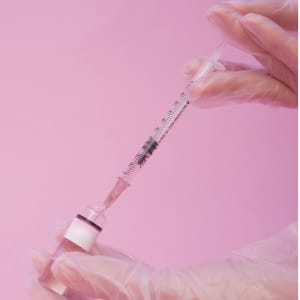
Vitamin shots are quick intramuscular injections that deliver targeted nutrients, most commonly B12, vitamin D, or blends marketed for energy and immune support. Because they bypass digestion, they can be helpful for people with low levels, absorption issues, or increased needs. Vitamin deficiencies can also affect your appearance. Low iron, B12, or vitamin D may contribute to fatigue, dull skin, dark circles, brittle nails, or hair thinning, while other nutrient gaps can impact hydration and overall glow. How often you can get shots depends on the nutrient, your baseline levels, and your goals.
More Related Articles
Related Procedures
Vitamin Injections Vitamin IV Therapy
 Microneedling with Platelet Rich Plasma (PRP)
 Chemical Peels
 Laser Skin Resurfacing
 NAD Injections
