Written By: Erin Storm, PA-C
Published: March 19, 2021
Last updated: June 03, 2021
For everyday skincare essentials, pre- and post-treatment support, procedure enhancers, or even treatment alternatives, we’ve got you covered.

The Skinny
When’s the last time you had your teeth cleaned? While we all most likely didn’t love our visits to the dentist when we were kids, oral health is an important part of overall health, and also the appearance of the face. While discussions on pacifier use, thumb sucking habits, floss use, and daily brushing are commonplace, considerations of jaw bone health, upper jaw and lower jaw alignment, gum disease, and tooth decay are less known (learn more in our complete guide to Misaligned Teeth & Bite Concerns).
Orthodontic treatments as children may have helped to alleviate crowded teeth and crooked teeth, but, if you didn’t keep up with your retainer, you may be finding the alignment of your teeth is suboptimal (malocclusion). Fortunately, multiple professional surgical and outpatient procedures, DIY braces kits, and at-home treatments exist to perfect your smile and facial structure.
The Specifics
Who may consider correcting the alignment of their teeth and bite?
Procedures to correct teeth and bite can benefit candidates in both aesthetic and functional ways. Cosmetic concerns relating to teeth overcrowding can cause individuals to be self conscious of their smiles. In cases of overbite, underbite, crossbite, or open bite, the gums, teeth, and jaw can be affected. These individuals will benefit from intervention to preserve oral health and improve appearance.
The Anatomy of the Oral Cavity

What can you expect from teeth and bite alignment procedures?
The invasiveness, commitment level, and side effects of teeth or bite alignment procedures is very dependent upon procedure. Classic braces or braces alternatives require significant time commitment and diligence in maintaining the appropriate progressive schedule. They also necessitate the long term use of retainers nightly.
The Anatomy of the Tooth
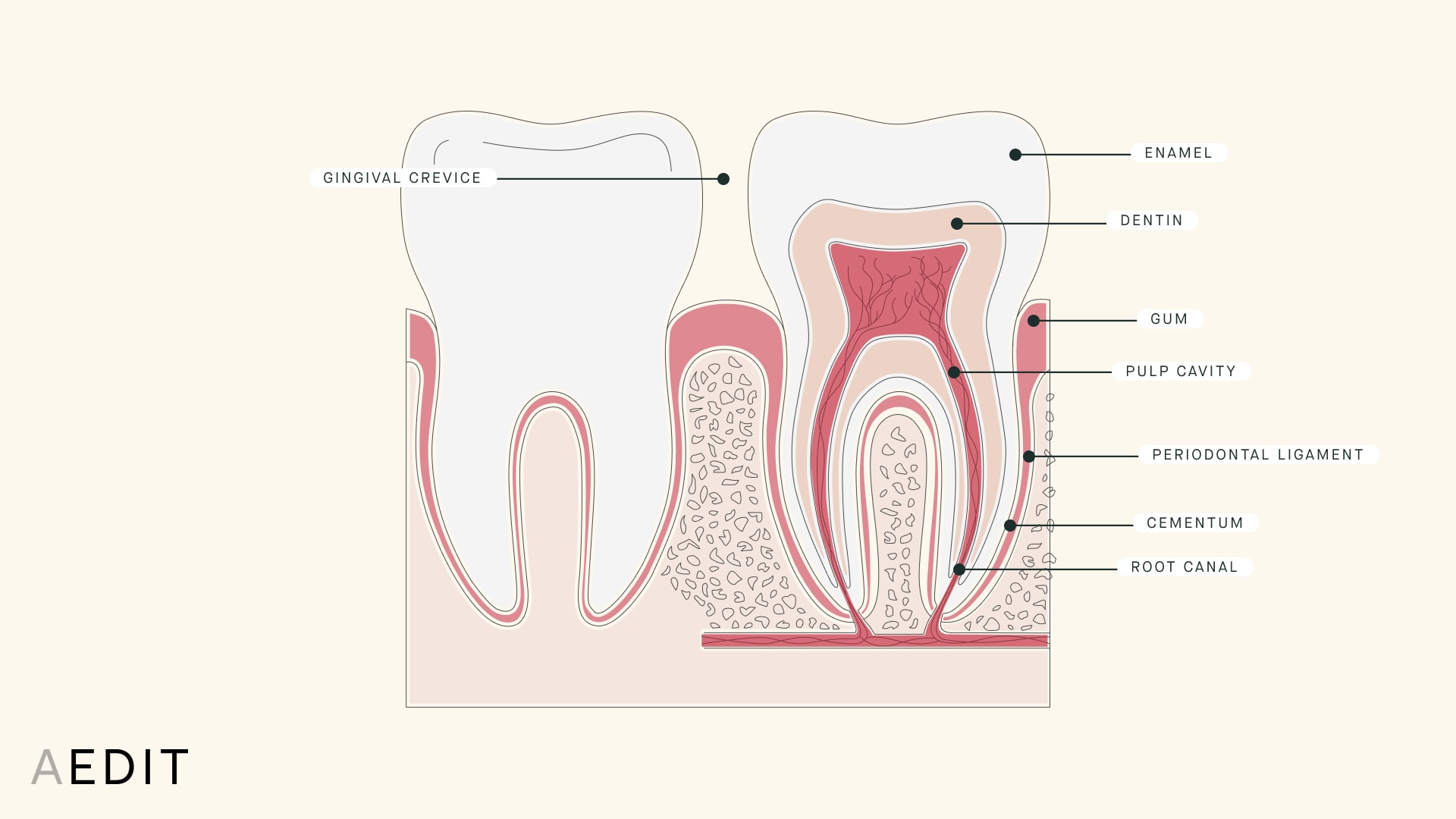
Dental procedures, like caps, veneers, and bridges, are usually outpatient treatments with minimal side effects, while dental implant procedures are significantly more involved and require long periods between work.
Orthognathic (read: jaw) surgery is highly invasive with significant side effects and extended recovery time. It is used to treat severe jaw and bite abnormalities.
When should you consider teeth or bite alignment procedures?
Candidates may consider teeth alignment or bite alignment procedures when they are in generally good health, can commit to the timelines involved with many of the repositioning procedures, and in the case of certain surgical procedures, have teeth already in generally good alignment prior to the operation. Good alignment refers to lack of overcrowding, significant spacing issues, or significant overbite or underbite.
Why should you consider teeth or bite alignment procedures?
A teeth or bite alignment procedure can provide not only aesthetic enhancements, but also help to improve and preserve oral health. Overbite, underbite, open bite, crossbite, and damaged teeth can be effectively addressed with a certified provider. Concerns related to teeth alignment and spacing can usually be addressed from the comfort of your home making them easy to incorporate into your daily routine.
Braces for Teeth & Bite Alignment
- Clear Aligners
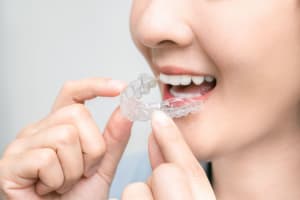
- Overview: Custom molded plastic that is worn daily for about 20 hours to gradually reposition teeth.
- Cost: $4,000 - $7,500
- Recovery & Results: Permanent results with continued nightly retainer use after about 10 to 15 months of wearing the aligners daily.
- ClearCorrect
- Overview: Another brand of custom molded plastic aligners that progressively reposition teeth.
- Cost: $2,000 - $8,000
- Recovery & Results: After up to a year and a half of daily wear desired results are usually achieved, and a nightly maintenance retainer is then used.
- Damon Braces
- Overview: More like traditional braces, however, considered to work faster and more efficiently with less adjustments needed.
- Cost: $3,800 - $8,000
- Recovery & Results: Braces are typically worn for 12 to 16 months and nightly retainer maintenance is then used.
- Invisalign
- Overview: Consistent with other progressive plastic mold repositioning systems.
- Cost: $3,000 - $8,000
- Recovery & Results: Aligners are worn daily for 10 to 15 months and then patients transition to nightly retainer maintenance.
- Lingual Braces
- Overview: Similar design to traditional braces, however, brackets are placed on the backside (interior) of the teeth.
- Cost: $8,000 - $10,000
- Recovery & Results: After regular wear for one to two years patients will transition to wearing a maintenance retainer nightly.
- MTM Clear Aligners
- Overview: A system of clear aligners used for candidates who have previously had braces but now desire additional corrections. Not for severe misalignments.
- Cost: $1,850 - $3,425
- Recovery & Results: Permanent results with daily wear for four to eight months and then a nightly retainer.
- Simpli5
- Overview: Progressive clear aligner system used for patients with mild to moderate overcrowding.
- Cost: $975 - $2,825
- Recovery & Results: Aligners are worn for four to five months and then a nightly retainer is used for maintenance.
- Smile Direct Club
- Overview: Direct to consumer clear aligner system that does not require orthodontist visits.
- Cost: $1,850 - $2,170
- Recovery & Results: Permanent results with daily use. After four to 14 months patients transition to a nightly retainer only.
- Traditional Metal Braces
- Overview: Metal brackets are placed on teeth and progressively adjusted. Best for patients with severe overcrowding.
- Cost: $3,000 - $8,000
- Recovery & Results: Permanent results after one to two years of use. Patients then transition to a nightly retainer to maintain results.
In the Los Angeles area?
Book yourself a Teeth & Bite Alignment Solutions treatment at AEDIT Cosmetic Wellness.
Dental Treatments for Teeth & Bite Alignment
- Dental Bonding
- Overview: Plastic resin is applied to damaged or decayed teeth to enhance appearance and improve strength.
- Cost: $300 - $600
- Recovery & Results: Patients can expect to return to work within one day with some mild tooth sensitivity. Immediate results that can last up to 10 years with proper care.
- Dental Bridges
- Overview: A multi appointment procedure utilizing prosthetics to cover spaces from missing teeth.
- Cost: $1,500 - $2,000
- Recovery & Results: Temporary tooth sensitivity and some mild swelling immediately after the procedures. Results can last five to 15 years with proper care.
- Dental Implants
- Overview: Permanent “anchors” are placed in the gum where missing teeth previously were located. This provides the foundation for fabricated teeth.
- Cost: $1,000 - $3,000
- Recovery & Results: Patients will need to allow two to six months for the implants to heal and fuse. Fabricated teeth can then be placed. Results are permanent with proper care.
- Dental Veneers
- Overview: A thin layer of porcelain or composite resin that overlies misshapen, worn, chipped, or undesirably spaced teeth.
- Cost: $1,000 - $3,500
- Recovery & Results: Results last for 10 to 15 years with proper care (including nightly mouthguard use to prevent grinding). Patients can expect mild tooth sensitivity immediately following treatment.
Jaw Surgery for Teeth & Bite Alignment
- Orthognathic Surgery
- Overview: Also known as corrective jaw surgery. Can address jaw/teeth misalignment, open bite, underbite, and overbite.
- Cost: $20,000 - $40,000
- Recovery & Results: Patients can expect pain and swelling for one to three weeks. Soft foods can be introduced after four to six weeks. Results are permanent.
Discover science-backed solutions from AEDIT Medshop
We’ve taken out the guesswork so you can shop with confidence, knowing you’re choosing what’s right for you.

Not sure what’s the right treatment for you?
Schedule an appointment to get your customized treatment plan.
To learn more about our content creation practices, visit our Editorial Process page.