An Expert-Driven Timeline for Botox and Filler This Party Season

To inject or not to inject? That is this month's question. With a calendar full of holiday parties, family gatherings, and photo-worthy celebrations, you may be tempted to book a last-minute appointment with your dermatologist or injector. But when it comes to injectables, timing is everything. While wrinkle relaxers and dermal fillers can help you look more refreshed, results aren't always immediate, and swelling or bruising can take several days to subside. So, how far in advance should you book your appointment? The answer depends on several factors, including your previous treatment experience, how you've responded in the past, the product being used, the injection site, and the expected recovery timeline. Here's what to consider so you can look and feel your best this holiday season.
What should you tell your provider about the event?
Planning injectables around a holiday event starts with a conversation about your schedule and goals. Tell your provider the event date, whether you'll be photographed, and if you have travel plans that could affect recovery or follow-up appointments. Be specific about the changes you'd like to see, how you've responded to previous treatments, and how much bruising, swelling, or downtime you're comfortable with. These details help your provider recommend an appropriate treatment and timeline, allowing time for results to develop and any temporary side effects to resolve. Your medical history, medications, and overall candidacy also influence the plan, and may mean adjusting or postponing treatment regardless of the event date.
AEDIT Founder and board-certified facial plastic and reconstructive surgeon Dr. William Kennedy explains, “If a patient came to me and shared that they had an upcoming flight or trip planned, I would take that into consideration when discussing the timing of their treatment. For example, activities such as lifting luggage into overhead compartments, sitting for extended periods, or resting their head against an airplane window could impact their comfort or recovery. Knowing about those plans would likely lead me to recommend having the treatment sooner, rather than waiting until closer to the event. It’s important to consider a patient’s upcoming activities and lifestyle when determining the best timing for treatment.”
How do wrinkle relaxer timelines differ from filler timelines?
Wrinkle relaxers (e.g., Botox, Dysport, Xeomin, and Daxxify) use botulinum toxin type A to temporarily relax targeted muscles and soften expression lines. Initial improvements may appear within three to seven days, with results generally assessed around two weeks, although timing varies by product. “When discussing treatment timelines, it’s important to understand that seeing the first visible change is not the same as seeing the final result. With wrinkle relaxers, patients may begin noticing changes within a few days, but the full effect typically takes about 10 to 14 days to develop. With dermal filler, patients may notice an immediate difference, but there can be swelling, bruising, or temporary unevenness as the filler settles. I generally encourage patients to allow approximately two weeks before assessing their filler results. So, the key distinction is between when a treatment first becomes visible and when it has had enough time to settle for us to properly evaluate the outcome. I want patients to give their treatment the appropriate amount of time before deciding whether any adjustments are needed,” says Dr. Kennedy.
Dermal fillers (e.g., Juvéderm, Restylane, Radiesse, and Sculptra), on the other hand, use ingredients including hyaluronic acid (HA), calcium hydroxylapatite, and poly-L-lactic acid to restore volume, enhance contours, or stimulate collagen production. Most fillers typically produce immediate results, but swelling and bruising can temporarily affect their appearance, particularly in the lips. Side effects should go away within seven to fourteen days. Scheduling treatment well before an event allows time for swelling to resolve, results to become clearer, and any necessary follow-up.
Dr. Kennedy elaborates, “When a first-time injectable patient comes to me with an upcoming event, I like to work backward from that date to determine the best treatment timeline. First, I consider what treatment they’re interested in and how much time is needed for the results to fully develop and settle. Different filler products are also designed for different areas and concerns, which can influence the treatment approach. With wrinkle relaxers, I generally want to allow at least two weeks for the full effect to appear. With filler, I also like to build in approximately two weeks to allow for swelling to subside and the product to settle. I also factor in time for a follow-up appointment if needed. For someone new to injectables, I would much rather have them come in early and allow plenty of time than try something for the first time right before a major event. My goal is for patients to feel confident and comfortable with their results, without feeling rushed.”
Do Botox, Dysport, Xeomin, and Daxxify Need the Same Planning Window?
Although Botox, Dysport, Xeomin, and Daxxify all use botulinum toxin type A, their onset and longevity differ. According to the brand’s site, Botox sees results within one to two days with full results in 30 days. Results usually last approximately three to four months. Dysport works slightly faster, with clinical studies showing initial improvements within two to three days and results lasting up to five months. Xeomin generally begins working within two to seven days, with results lasting up to four months. Daxxify also has a relatively fast onset, with most users seeing results within the first two days. Compared to the other botulinum toxin type A options, Daxxify typically lasts longer. Clinical studies found a median duration of approximately six months for improvement in frown lines.
“When planning injectable treatments around the holidays, the biggest differences come down to how each product works, how quickly patients see results, and how much time is needed for recovery. I always encourage patients to plan ahead, especially during the busy holiday season, so we're not rushing the treatment or trying something new right before an important event,” says Dr. Kennedy.
Dosing also plays a role in treatment outcomes. Studies involving Dysport and Xeomin suggest that dose can influence the strength and duration of wrinkle reduction, although higher doses don't necessarily produce faster or better results. Providers consider muscle strength, facial anatomy, previous treatment response, and desired movement when determining the appropriate dose. Because each product uses its own potency measurements, units are not interchangeable between brands. Despite these differences, scheduling any of these treatments three to four weeks before a holiday event is a practical approach. This allows time for the full effect to develop, any temporary bruising or swelling to resolve, and a follow-up assessment if needed. Individual responses depend on factors including facial anatomy, muscle activity, dosage, and previous treatment history. It's also important to understand that product units are not interchangeable, meaning the number of units used for Botox cannot be directly compared with those used for Dysport, Xeomin, or Daxxify.
Why Does Filler Require Its Own Recovery Buffer?
Dermal fillers can produce an immediate improvement in volume and facial contours, but that doesn't mean the final result is visible right away. Swelling, bruising, and tenderness are common after treatment and can temporarily alter the appearance of the treated area. Recovery also varies depending on the injection site, filler formulation, amount injected, and how well it was injected. Because of this, Dr. Kennedy recommends avoiding scheduling treatment immediately before a big event. “I generally recommend allowing at least two weeks for the initial swelling and bruising to improve and to follow your aftercare instructions. Every patient and treatment area is different, so it's important to follow the specific guidance provided by your injector. This may include avoiding strenuous exercise, excessive heat, or unnecessary pressure on the treated area for the recommended period. Lastly, don't rush to judge your results. Filler can look different immediately after treatment than it will once swelling subsides and the product settles. Give your results time to develop before deciding whether any additional treatment is needed. Ultimately, the best recovery tip is to plan ahead, follow your provider's recommendations, and give your body time to heal.”
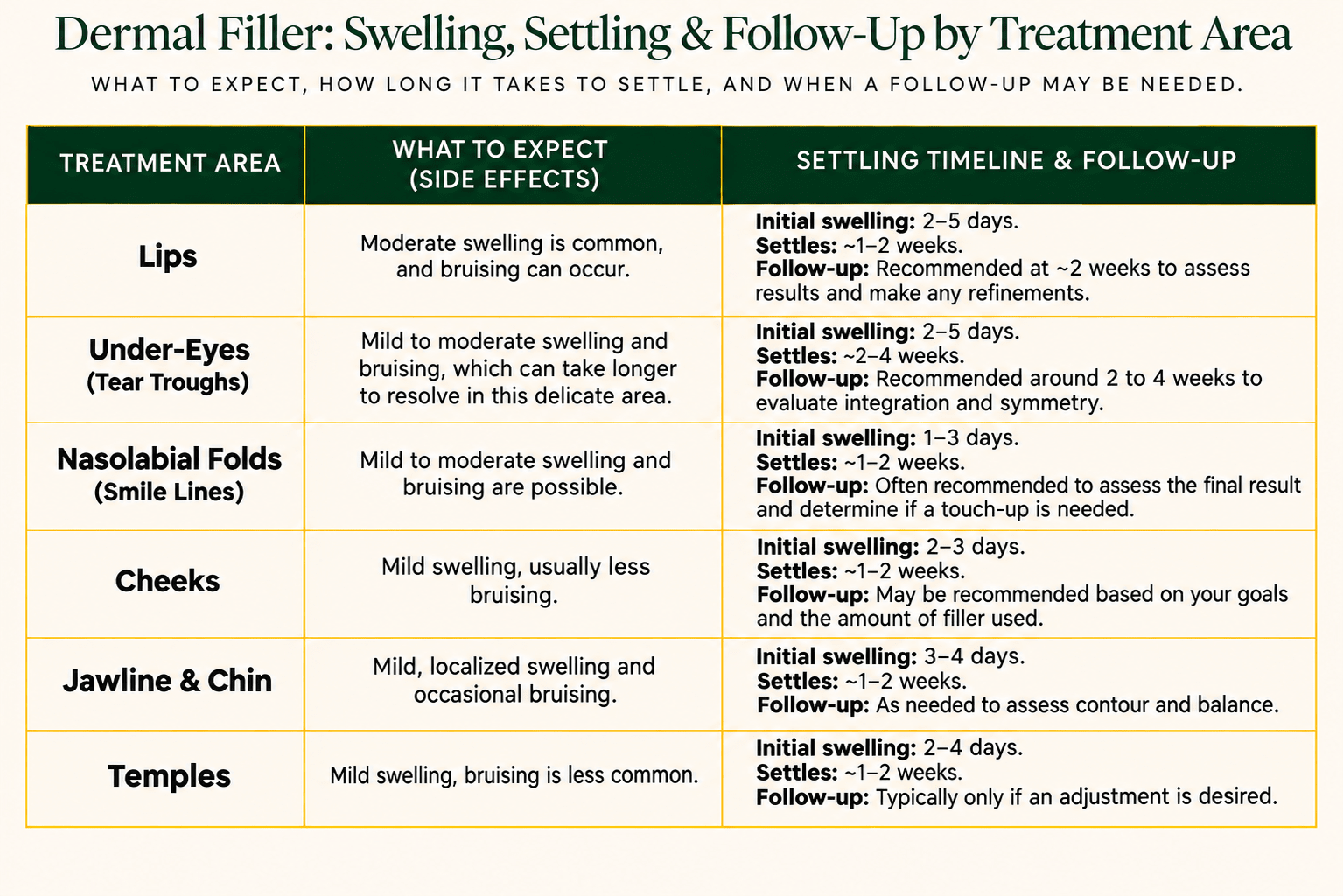
How Do First Treatments and Follow-Up Change the Schedule?
Trying a new injectable, switching products, or treating a different area may require additional planning before a holiday event. Even if you've had injectables before, your response to a new product or treatment area may differ from previous experiences. For this reason, providers often recommend a conservative approach, starting with an appropriate amount of product and allowing enough time for the results to develop before considering adjustments. This is particularly important when planning around an event, since adding more product too soon can lead to an outcome that differs from what you originally intended.
Building time into your schedule for a follow-up appointment is also important. During this visit, your provider can assess symmetry, muscle movement or volume changes, and whether the desired outcome has been achieved. However, a follow-up doesn't automatically mean a touch-up is necessary. Depending on the treatment, your provider may recommend waiting longer for the results to settle, making an adjustment, or leaving the results as they are.
Patients should also follow product-specific aftercare instructions and contact their provider about persistent or worsening redness, swelling, pain, or other unusual symptoms. Vision changes, unusual or severe pain, or white, gray, or blue skin discoloration after filler injections require emergency medical attention. Difficulty breathing, swallowing, or speaking after wrinkle relaxers also requires emergency care. These symptoms should never wait until a scheduled follow-up appointment.
What If the Event Is Too Close?
If the event is only days away, Dr. Kennedy recommends postponing the treatment until after the event. Even familiar treatments can cause unexpected bruising, swelling, or results that take longer than anticipated to develop. Dr. Kennedy cautions, “When a patient is considering a new aesthetic treatment too close to an important event, I generally recommend postponing rather than risking an unpredictable recovery. Even treatments with minimal downtime can cause swelling, bruising, or temporary changes in appearance, and every patient responds differently. After assessing their skin and goals, I may recommend a lower-recovery option, such as a gentle hydrating facial, instead of introducing a new injectable or more intensive procedure. The important thing to remember is that no treatment is entirely risk-free, and even patients who have undergone the same procedure multiple times without complications can experience unexpected swelling or bruising. My priority is always to help patients look and feel their best without introducing unnecessary risks right before a special occasion.”
Ahead of booking treatment, discuss timing and any concerns with your provider. Confirm the event date, travel plans, desired results, and expected onset and settling time, and share your previous treatment history. Ask about potential downtime, whether a follow-up appointment is needed, and if your expectations are realistic. While planning ahead can help minimize surprises, treatment outcomes and recovery timelines vary, so it's important to allow some flexibility.
Discover science-backed solutions from AEDIT Medshop
We’ve taken out the guesswork so you can shop with confidence, knowing you’re choosing what’s right for you.